
If you’ve ever seen a dog trembling through fireworks, you know how heartbreaking it can be.
The good news? You can help your Labrador never develop that fear in the first place — by introducing sounds slowly, playfully, and with calm confidence from the very start.
Labrador puppies are curious, bright, and brave — but they also go through sensitive learning windows where experiences “stick” deeply. Sudden loud noises like fireworks, thunder, or even kitchen clatter can be overwhelming if paired with tension or surprise.
The goal isn’t to flood your puppy with sound. It’s to gently build positive associations — and to help them learn that the world’s noises don’t need to be scary.
Here’s how to raise a Labrador that takes life’s bangs and booms in stride.
1 Start small — and make it playful
Play gentle background sounds (fireworks, city noise, thunderstorms) at a very low volume during fun, calm moments — mealtime, training, cuddles, or quiet play.
At first, your puppy might barely notice. Perfect! That’s what we want.
Gradually increase the volume over time, always checking that they stay relaxed.
👉 Tip: Watch your puppy’s body language. If their ears pin back, they freeze, or they walk away, the volume is too high. Go back a step.

2 Use play as sound therapy
Play is one of the best and most natural ways to desensitize your Lab puppy.
Tug games, chase, or rolling a ball while background sounds play can help your puppy associate noise with fun and connection.
You can even create playful sound moments in daily life:
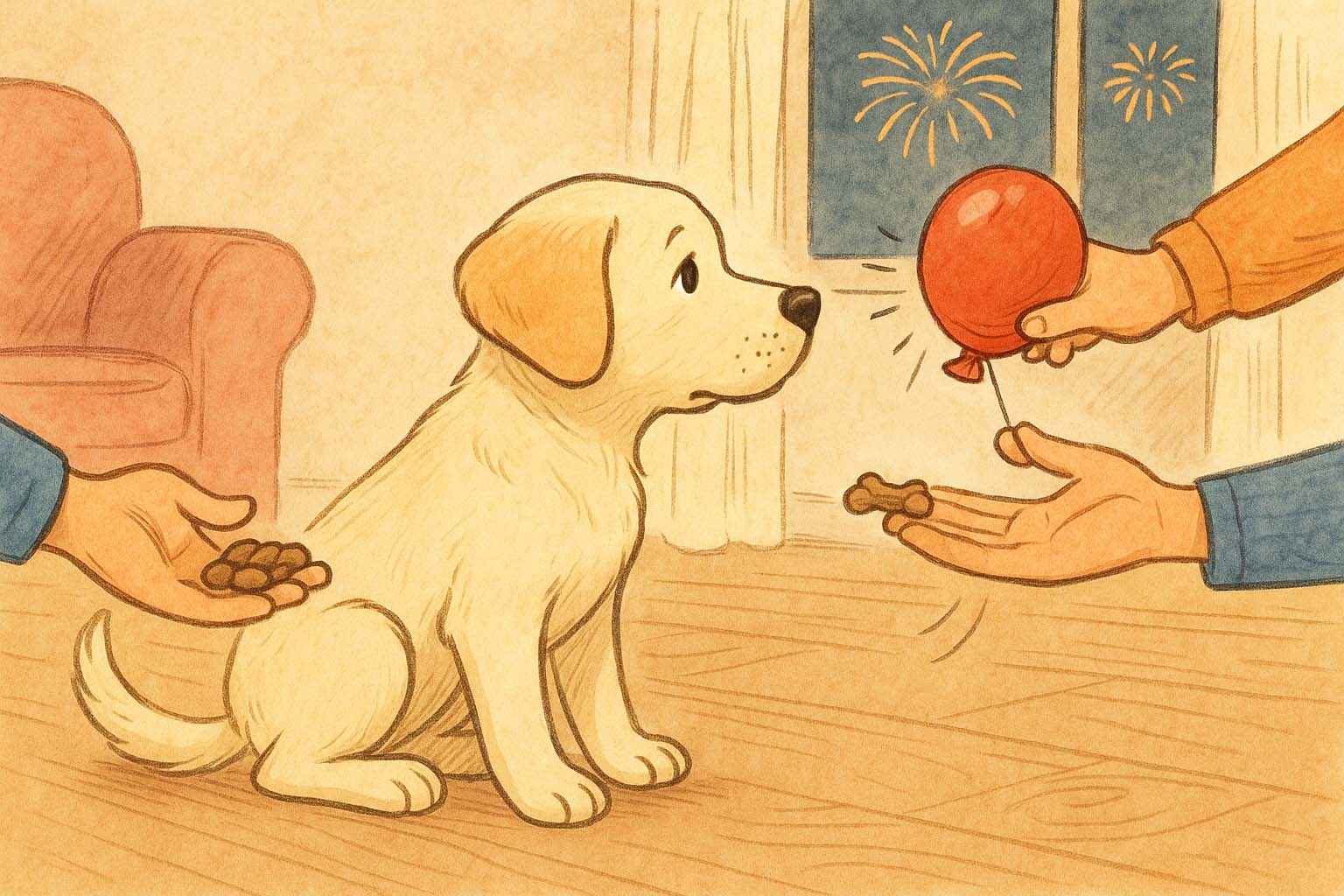
- Pop a balloon gently while tossing a treat right after.
- Drop a spoon or two into the sink — and celebrate with a little game.
- Let your puppy watch while you gently clap, laugh, or open the dishwasher — and reward them for staying calm.
The goal is for your Lab to think, “Oh, that noise? It just means more fun is coming.”
These experiences help wire your puppy’s brain for curiosity instead of fear.
3 Pair every new noise with something wonderful
For Labradors, food equals joy.
Every time your puppy hears a sound — a doorbell, car door, or kitchen clang — toss a treat.
You’re teaching them: “Sounds make good things happen.”
Over time, the noises themselves become the cue for relaxation and positive expectation.
4 Mix in movement and real life
Once your puppy is doing great with background sounds, start bringing small movements and surprises into the mix.
Try things like:
- Having a friend clap softly from a distance while you play or train.
- Rolling the vacuum cleaner nearby — off at first, then briefly on.
- Gently knocking on a door while your puppy eats.
This builds emotional flexibility: the ability to recover quickly from sudden or new experiences — one of the most valuable life skills a Labrador can have.
5 Your calm energy is everything
Puppies are emotional mirrors.
If you gasp, freeze, or rush to comfort them every time a sound happens, they’ll learn that something must be wrong.
So instead — take a deep breath.
Exhale slowly.
Smile softly.
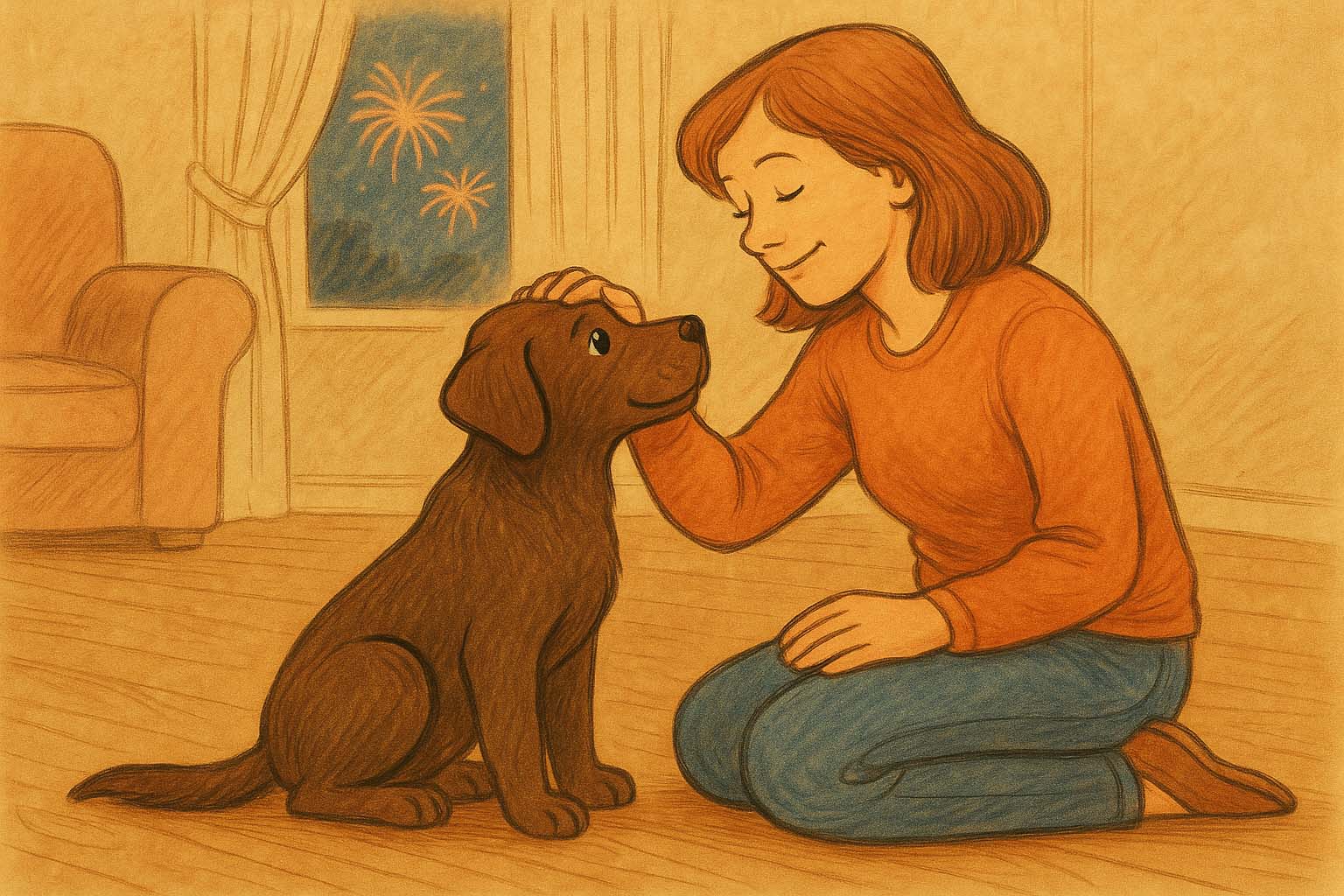
Use your relaxed tone to say something simple and cheerful: “Good puppy.”
Then go on with what you were doing.
That calm, grounded energy tells your Labrador, “The world is safe. You’re safe.”
And over time, they’ll start to mirror that calm back to you.
6 Keep sessions short and sweet
You don’t need long or intense practice.
Just five calm minutes a few times a week are enough.
Always end with success — a happy tail, soft eyes, and maybe a nap afterward.
If you ever notice your puppy becoming uneasy, simply take a few quiet days before trying again. Progress is built on comfort, not pressure.
The key takeaway
Desensitizing your Labrador puppy to sound isn’t about making them tolerate noise.
It’s about helping them feel safe and supported — knowing that when life gets loud, their human stays calm and fun.
That’s what builds trust. And that trust becomes the foundation for every bit of training you’ll ever do together.