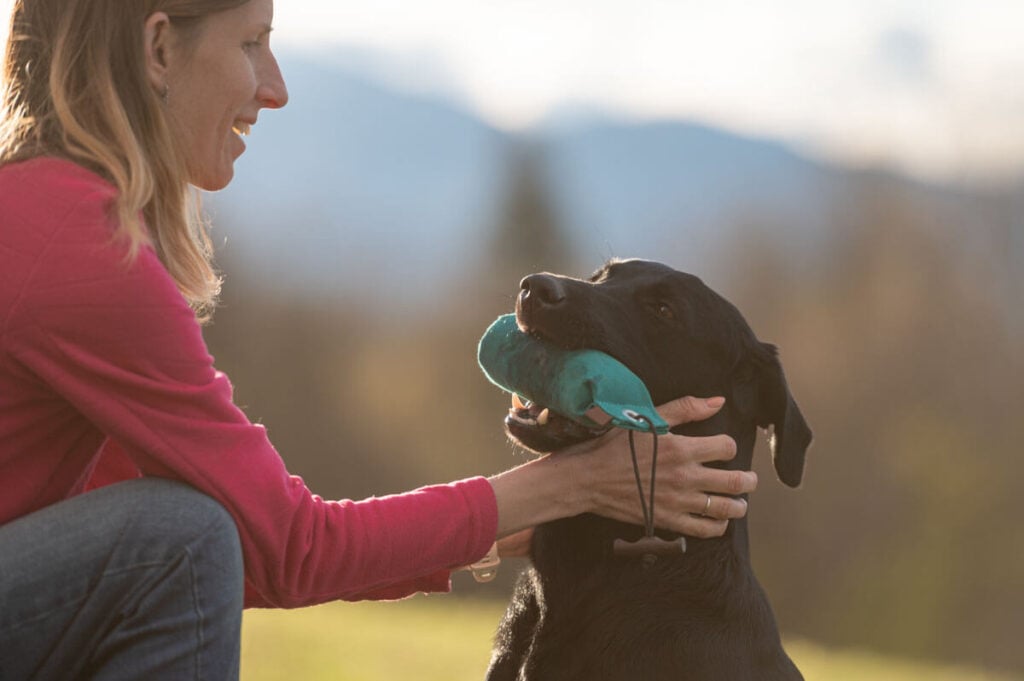
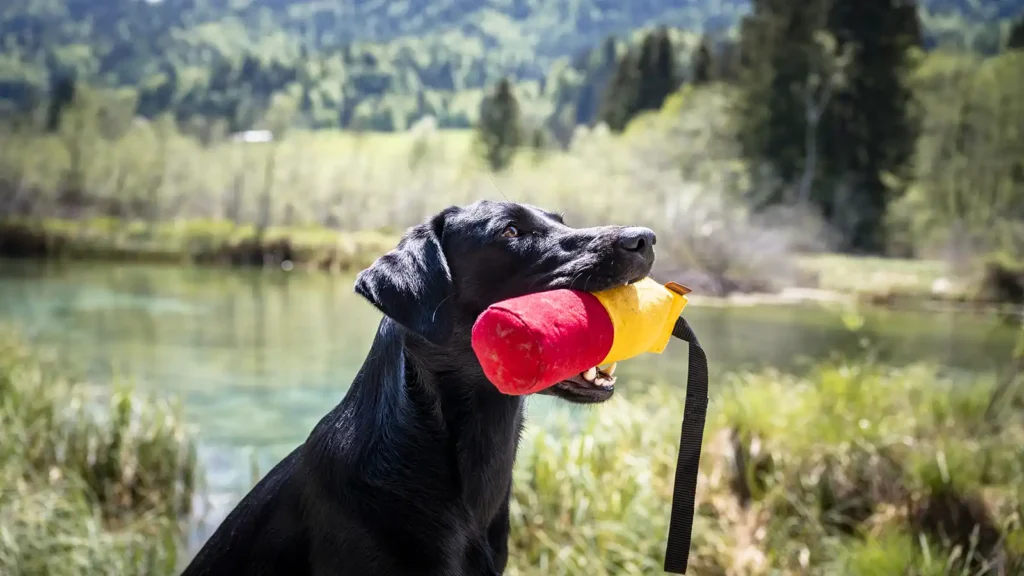
If you live with a Labrador, you have probably felt it:
That natural urge to chase, carry, grab, search, bring things, and stay involved in action.
It shows up everywhere.
In the way they light up when something moves.
In the way they proudly carry objects around the house.
In the way they seem to come alive when there is something to find, hold, or bring back.
In the way excitement runs through their whole body when they feel like they have a job.
And when you really live with Labradors, you start to realize something important:
These are not just random little quirks.
They are clues.
Clues to what this breed was made for.
Clues to what feels deeply natural to them.
Clues to the kind of work that does not just entertain them for a moment, but reaches something much deeper inside.
Why Labradors Naturally Love Retrieving
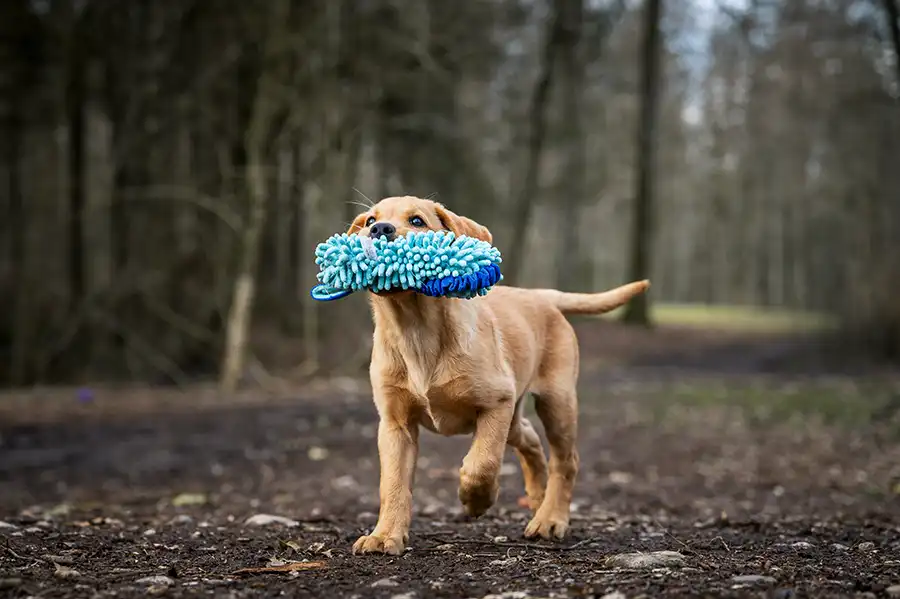
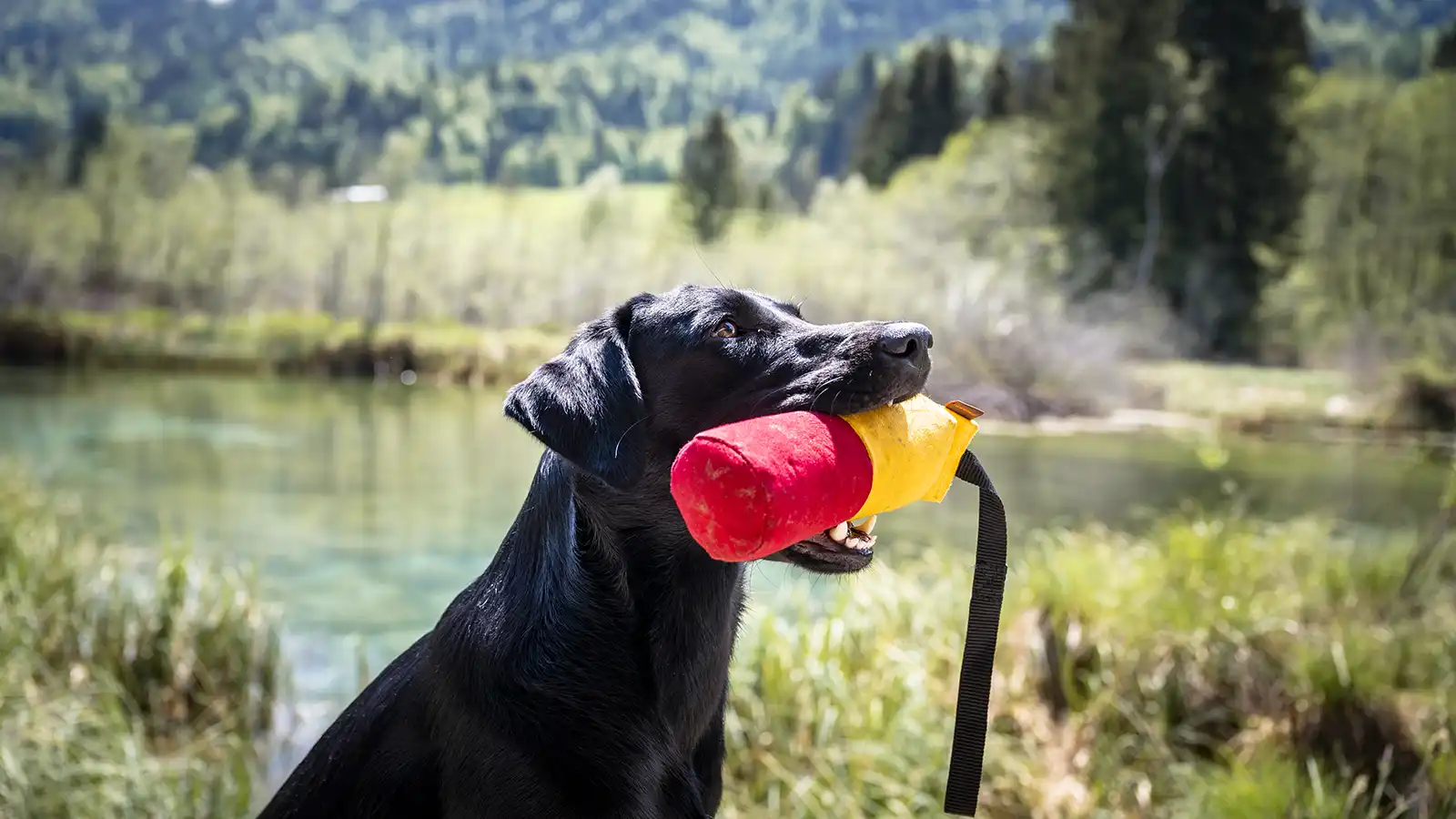
Because Labradors were bred to retrieve.
They were bred to carry gently, to use their mouths, to move through fields and water, to search, to bring things back, and to work closely with people. That desire to hold, chase, find, and return is not some silly habit they picked up along the way.
It is part of who they are.
And that matters much more than many people realize.
Because when a Labrador does not have a healthy outlet for those instincts, everyday life can start to feel harder than it should.
A dog who feels busy even after a walk.
A dog who becomes wild around toys, dogs, people, smells, …
A dog who struggles to stay steady when something exciting appears.
A dog who pulls toward every interesting thing.
A dog who is loving and wonderful and full of heart – but somehow still hard to live with in certain moments.
Why Exercise Alone Is Not Enough for Labradors
And the answer is not simply more exercise.
It is not just about tiring them out.
It is about understanding what kind of outlet actually makes sense for a Labrador.
Many Labradors are active. They go on walks, they play, they move plenty. And yet they can still feel unsettled, overexcited, impulsive, or hard to regulate.
That is because movement alone is not always enough.
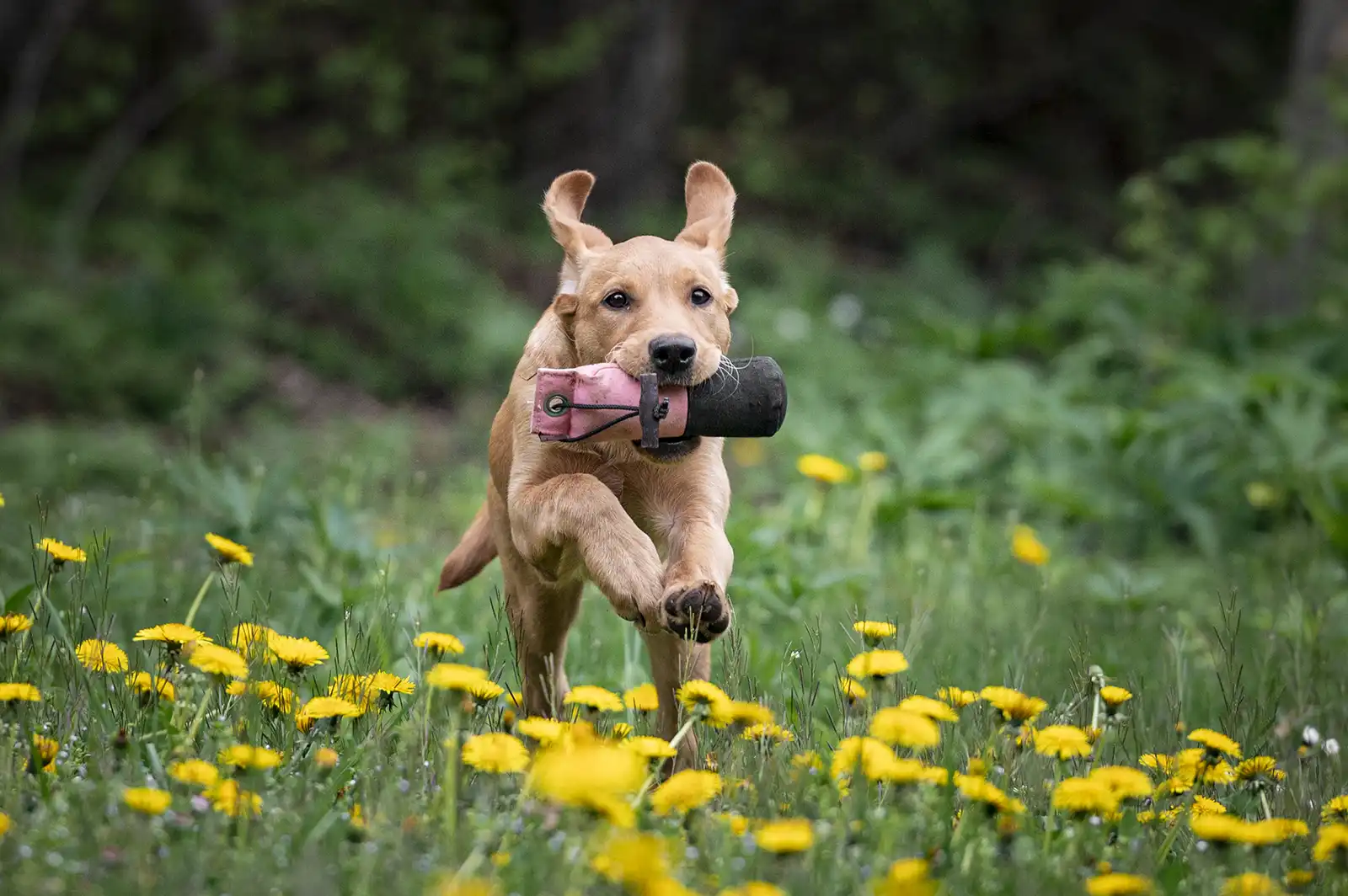
A Labrador often needs more than activity. They need purpose.
Retrieving, when done in a thoughtful way, can provide exactly that. It gives shape to their energy. It gives direction to their instincts. And it allows them to use parts of themselves that were put there for a reason.
This is why retrieving can be such a powerful outlet. Not just because Labradors enjoy it, but because it feels deeply right to them and it speeks to the deeper desire inside them.
How Retrieving Builds Calmness and Focus
Why it changes so much
Purposeful retrieving is not just about throwing something and hoping your dog gets tired.
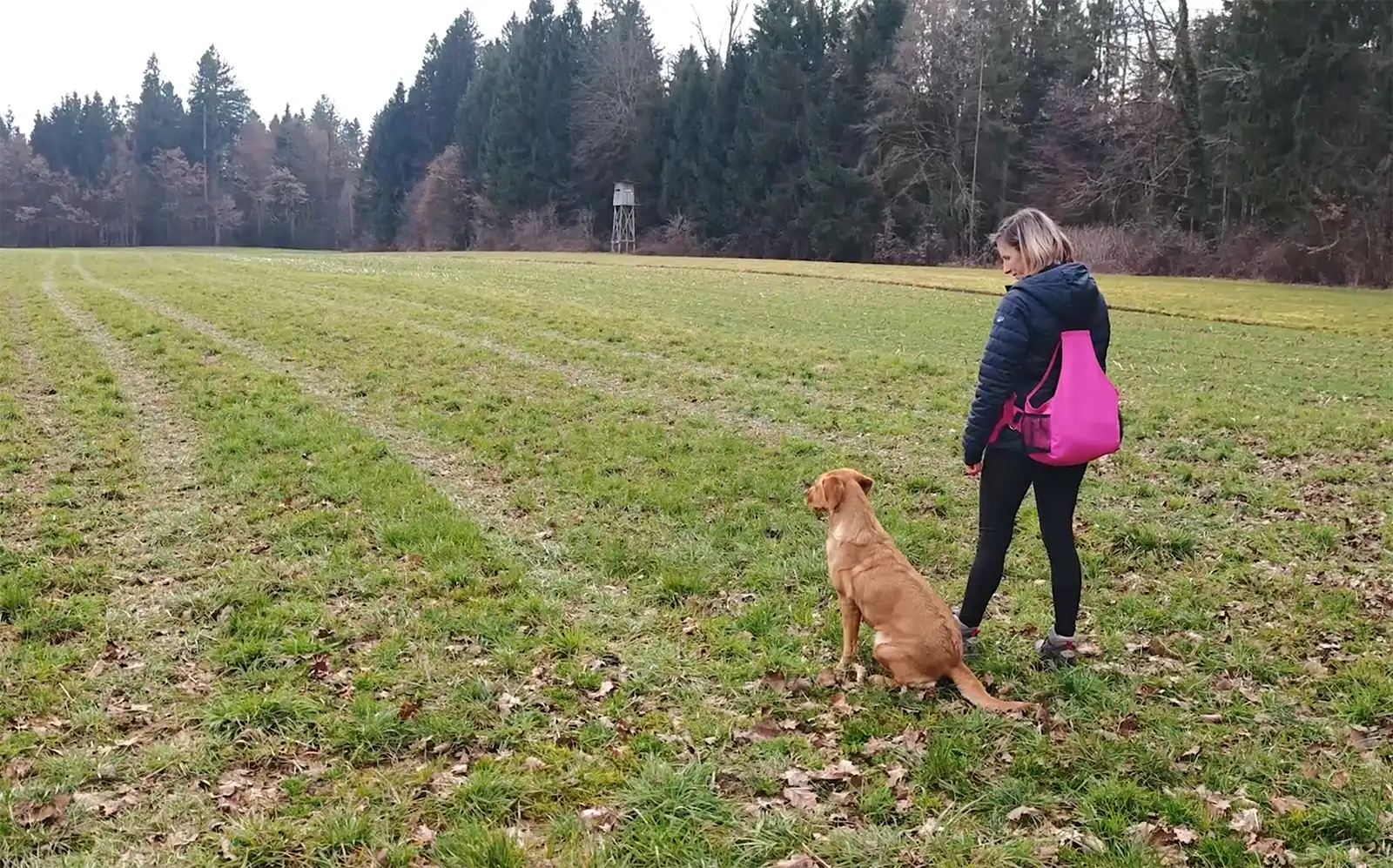
Done well, it teaches a Labrador to stay connected in excitement, to wait before action, to move with purpose, and to come back in a more organized way. Instead of simply becoming more hyped up, they begin learning how to hold themselves together.
That is where things start to transfer beautifully into everyday life.
Because the dog who is learning to pause before a retrieve is also practicing patience.
The dog who is learning to stay engaged with you before being sent is also building connection.
The dog who is learning to return calmly is often strengthening skills that support recall, cooperation, and steadiness in other situations too.
If you would love to teach retrieving in a way that builds steadiness, connection, and real-life skills — not just excitement — you can learn more inside my course, Bred to Retrieve: Retrieving for Pet Labradors

How Retrieving Improves Everyday Behavior
So what starts as retrieving practice often becomes much more than that.
It can help a Labrador feel less frantic.
Less scattered.
More reachable.
More able to think before reacting.
And that changes daily life in a very real way.
Building Steadiness Through Retrieving
The steadiness Labradors need in real life
Steadiness is not just for formal training. It matters at home, on walks, around other dogs, around excitement, and in all those little moments where Labradors tend to tip quickly from eager into over-aroused.
This is one of the most beautiful things about retrieving done properly: it helps build steadiness from the inside out.
Your Labrador learns that excitement does not always mean immediate action. They learn they can feel eager and still wait. They can want something and still stay connected. They can move powerfully and still listen.
That lesson matters far beyond the retrieve itself.
It matters when the lead comes out.
When a bird flies up.
When another dog appears.
When something fun or stimulating happens and your Labrador feels that familiar rush through their body.
A dog who has practiced channeling excitement in retrieving often finds it easier to cope with excitement elsewhere too.
Working With Your Labrador’s Instincts
I think this is the heart of it.
Life with a Labrador usually gets easier when we stop asking them to be less Labrador, and start helping them be Labrador in a more guided way.
They were bred to do things. Purposeful things. Joyful things. Cooperative things.
So when we give them a meaningful outlet for those instincts, we are not spoiling them or creating extra excitement. We are meeting a real need. We are giving them something that makes sense to their body, brain, and nature.
And often, that is when we start to see more calm, more cooperation, and more balance.
Not because the dog has changed into something else.
But because they finally have a better place for all that natural Labrador energy to go.
Final Thoughts: A Better Way to Channel Labrador Energy
Retrieving is not just a fun extra for Labradors.
It is one of the most natural, healthy, and helpful outlets we can give them.
It brings fulfillment, not just activity.
Structure, not just stimulation.
Steadiness, not just excitement.
And when those skills start to transfer into real life, everyday life with your Labrador begins to feel easier, calmer, and far more connected.
Because the answer is never to suppress what your Labrador is.
The answer is to understand it – and guide it well.
If you want to turn retrieving into something far more meaningful than endless throwing and chasing, my course Bred to Retrieve will show you how to build steadiness, impulse control, cooperation, and real-life skills — step by step, in a way that truly makes sense for Labradors.