
Many Labrador owners tell me a similar story:
“We walk him in the morning and again in the evening, but he’s still crazy, obsessed, and never really settles.”
On paper, that sounds perfect. Two walks a day, food, a comfy bed, plenty of love. But for an active, intelligent Labrador, even two walks can still mean that their window of opportunity to truly be a dog is much smaller than it looks.
If those walks are mostly just marching from A to B, always on a short leash, little sniffing, little thinking, no real outlets for Labrador instincts, then your dog is technically “getting out”… but not truly fulfilled. And when that window of opportunity stays narrow, you often see the same problems: over-the-top excitement, obsession, pulling, and a dog who struggles to settle, no matter how far you walk.
Let’s look at what this window really means.
What is a “Window of Opportunity” for a Labrador?
When I talk about a window of opportunity, I mean the moments in your Lab’s day when they actually get to live as a Labrador, not just as a polite pet following along beside you.
Those are the times when your dog can really use their nose, move their body freely, chew and carry things, solve little problems, and genuinely connect with you. It’s when they get to explore, investigate, search, play, and feel like they have a “job,” not just a route to follow.
If your Lab spends most of the day at home, resting or waiting, and then has only two rather controlled walks, their windows of opportunity might still be very narrow. Yes, they go outside twice. But if those outings are mostly about “keep up, don’t pull, leave it, come on,” then there is not much space left for their Labrador nature.
Why “Just a Walk” Is Often Not Enough
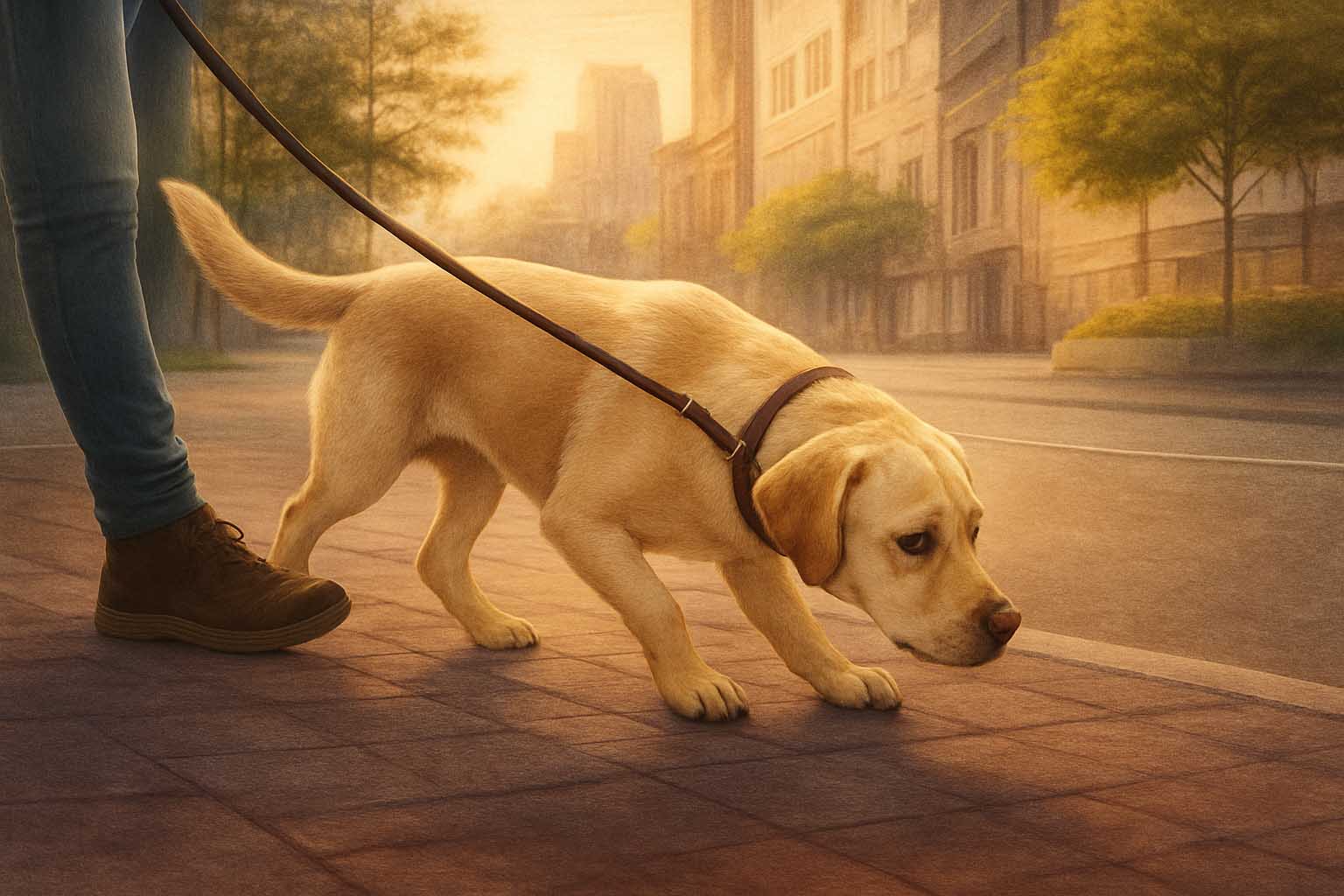
Walks are important. They give your dog movement, a change of scenery, fresh air, and toilet breaks. But just a walk, especially if it is always the same route, same speed, same rules, is not enough for many Labradors.
These dogs were bred to be working retrievers. They are meant to use their noses to search for game, carry things in their mouths, make decisions in the field, and work closely with people. That heritage is still inside your cuddly family Lab.
If their walks are mostly:
- brisk, focused marching on a short leash,
- little time to sniff,
- no real chance to explore or search,
- no jobs, no small challenges, no games,
then your Lab is physically present on the walk, but mentally and emotionally still underfed.
That’s when you start seeing signs like frantic pulling, obsession with certain toys or smells, or a dog that seems to get more hyped the more you walk. They are not just tired or unfit. They are under-stimulated in the right ways.
Two Walks, One Small Window
So yes, your Lab gets a morning walk before you go to work, and an evening walk when you come back. But if those are the only interesting parts of their day, they still have just two small windows of opportunity to be themselves.
Think about how long the rest of their day is: long stretches of waiting, resting, maybe watching you rush around, hearing sounds outside but not doing much about them. All the while, their natural needs are quietly building:
They need to sniff.
They need to chew.
They need to explore.
They need to use their brain.
They need meaningful contact with you.
When this all gets squeezed into two fairly controlled walks, those walks can start to feel like pressure points, not release points. Your dog may hit the pavement already overflowing with energy and curiosity. They’re trying to fit all their Labrador-ness into those two outings, and it spills out as “crazy” behaviour.
Enriching the Walk: Turning Routine into Opportunity
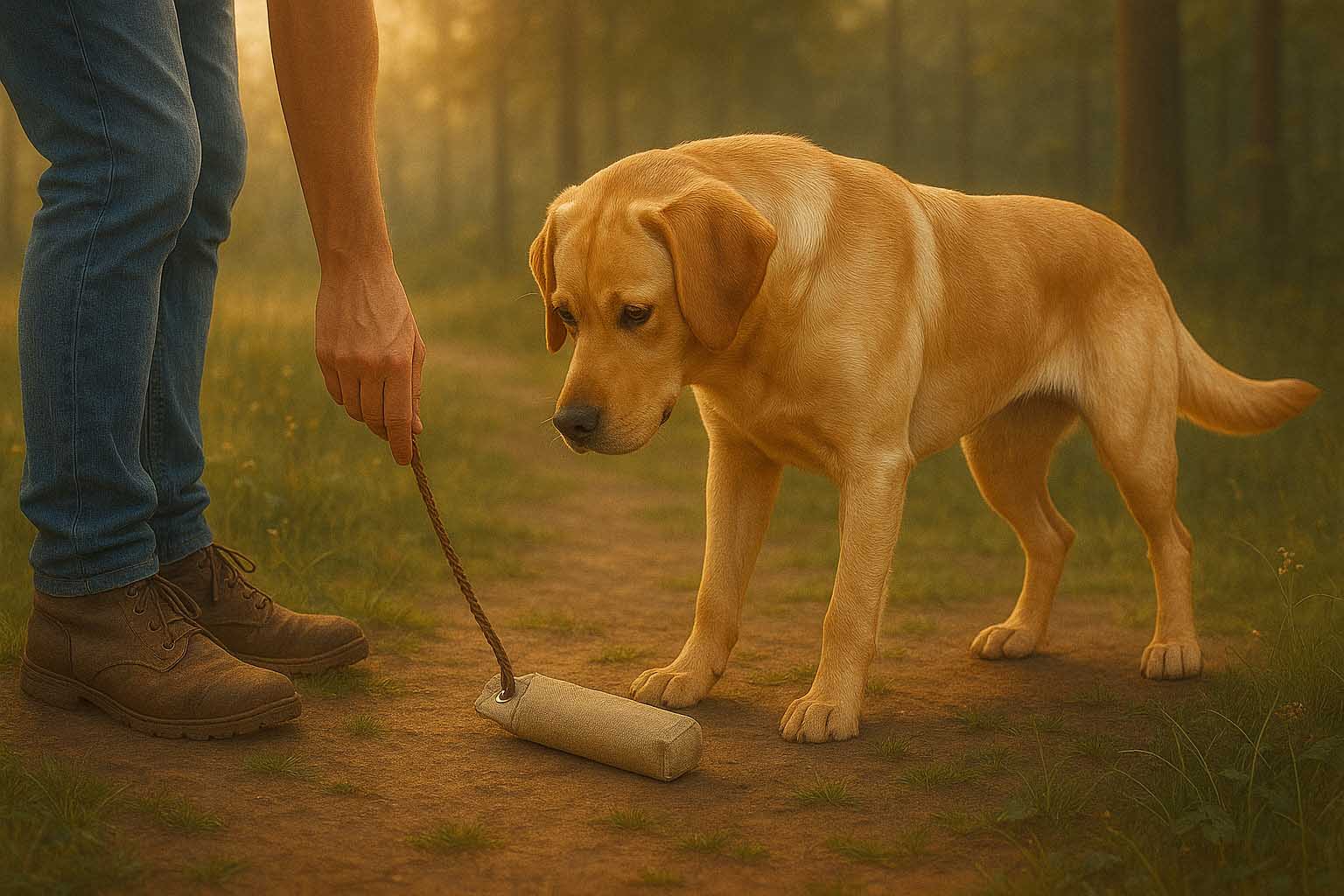
The good news is you don’t have to add hours and hours of extra exercise. You can start by changing the quality of the walks you already do.
On your morning and evening walks, try to build in small pockets of freedom where your Lab can use their instincts in a safe way. For example:
- Slow down in certain areas and let them really sniff. Not just one quick sniff, but a few minutes to read the “news” on that patch of grass or hedge. For a Labrador, sniffing is not a waste of time; it is mental work.
- Add a bit of searching. Toss a few pieces of kibble or treats into the grass and let them hunt them out. You can do this on lead in a quiet spot. Suddenly the walk is not just walking; it’s a mini nose-work session.
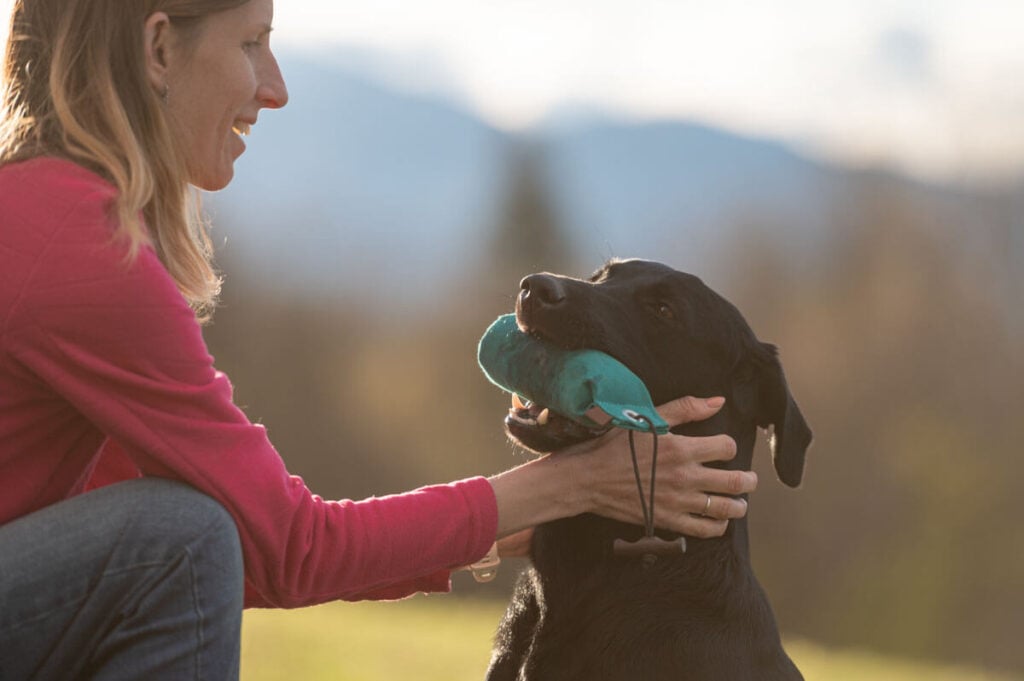
- Use simple retrieving as a job, not just endless ball throwing. Ask your dog to wait, walk a short distance, place the toy, come back, and then send them to fetch. Or hide the toy behind a tree or in light cover and let them search for it instead of seeing it fly.
- Include a few short focus moments with you. A hand target (nose touch to your palm), a bit of walking where you reward them for glancing up at you, or a quick “find me” game where you hide behind a tree for a second and call them. These little games start to open a window of communication, not just movement.
When you enrich the walk this way, the same 20–40 minutes suddenly become richer and more satisfying. Your Labrador is not just burning energy; they are using their brain, their nose, their mouth, and their bond with you.
The Morning Walk: Setting the Tone for the Day
The morning walk is especially powerful. It is the first window of opportunity your dog gets after sleeping through the night and before many hours of waiting while you are at work.
If this walk is only a quick, rushed loop with “come on, hurry, I’m going to be late,” your Lab may start the day still full of unmet needs. But if you can make even a small part of that outing more thoughtful, it can completely change how easily they settle when you’re gone.
That might look like:
- allowing five minutes in a quiet corner where they can sniff thoroughly,
- doing one tiny search game with a few bits of food tossed into the grass,
- or practicing a short, simple connection game where you reward eye contact or a nose touch.
It doesn’t have to be long. Even a few minutes of real mental engagement in the morning can help your Lab relax more easily during the rest of the day, because they’ve already been “seen” and given a chance to be a dog, not just rushed along.
Adding Enrichment Between Walks
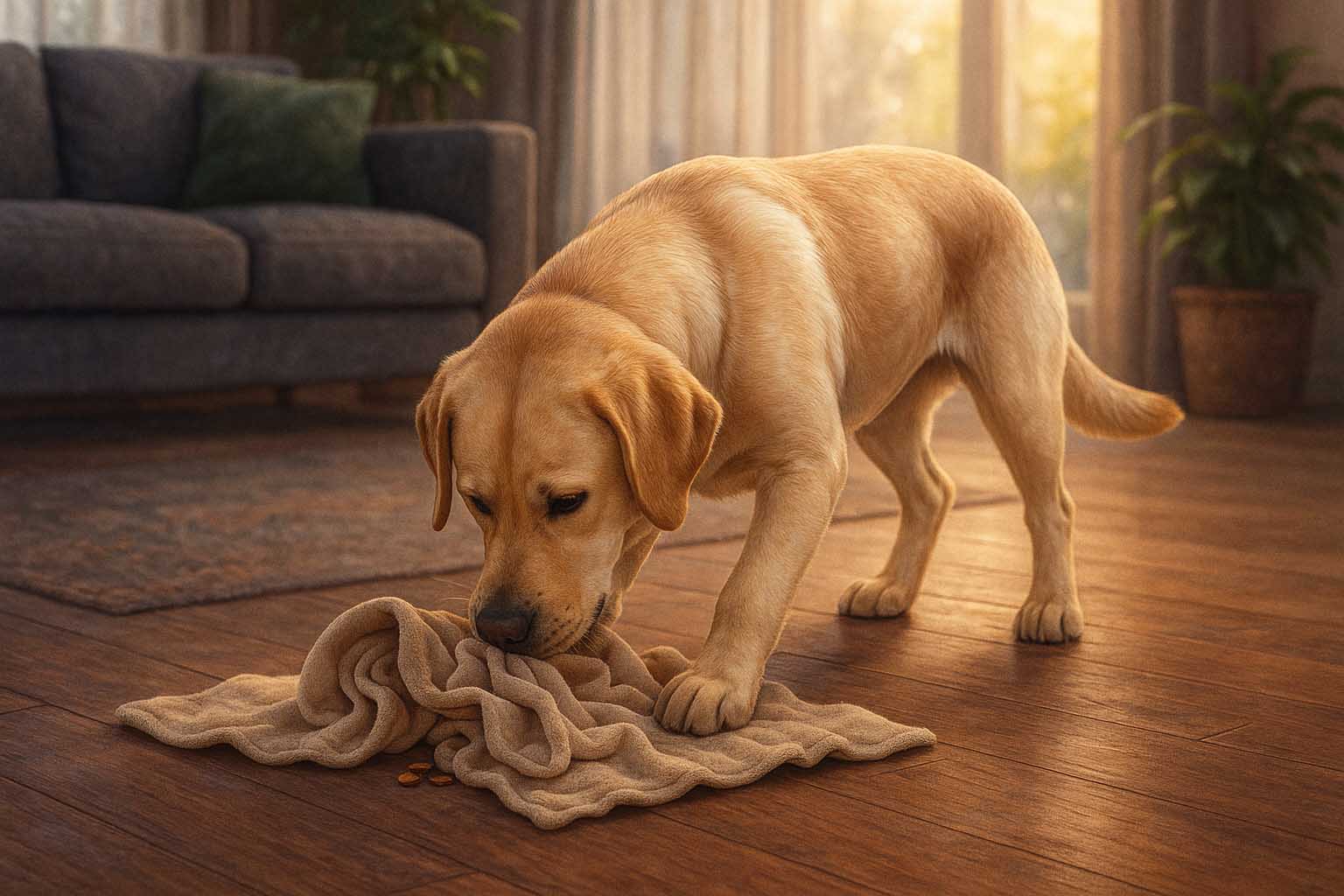
Walks, even enriched ones, are still only part of the picture. To widen your Lab’s window of opportunity, it helps to sprinkle small activities into the day when possible. This doesn’t mean constant entertainment. It means carefully chosen outlets for the things Labradors naturally want to do.
If someone is home during the day, or even just when you come back for lunch or finish work, you can give:
- A stuffed Kong, lick mat, or safe chew to work on. Chewing and licking are deeply soothing and give your dog something to do that is satisfying and calming at the same time.
- A quick “find it in the house” game, where you hide a few pieces of food or a toy in one room and let your Lab search. They use their nose and brain, and it only takes a few minutes.
- A short problem-solving activity, like a rolled-up towel with treats hidden inside, that they can work out on their own or a fun trick.
None of these activities are long, and they shouldn’t overstimulate your dog. Instead, they gently open more windows of opportunity to use their instincts and feel purposeful, even on days when life is busy.
What Changes When You Open More Windows

When you start enriching the walks you already do and adding a little bit of breed-specific enrichment between them, something beautiful tends to happen.
Your Lab begins to come home from a walk not just physically tired, but mentally satisfied. They may start the walk less frantic because their whole world is no longer compressed into that one outing. They become more able to listen, because their brain is already in “thinking mode,” not just in “explode and run” mode.
At home, you often see less nagging and restlessness. A dog that has had several chances to sniff, search, retrieve, chew, think, and connect throughout the day can finally exhale. They are still a Labrador with energy and enthusiasm, but they are not constantly boiling over.
You haven’t changed who they are. You’ve simply widened their window of opportunity to live as the dog they were bred to be.
A New Question to Ask Yourself
So instead of only asking:
“Did I walk my dog this morning and evening?”
try asking:
“During those walks, and in between them, how many windows of opportunity did my Labrador have today to sniff, explore, think, chew, retrieve, and connect with me?”
If the answer feels small, don’t feel guilty. See it as a gentle invitation. You don’t need more hours; you need more quality in the time you already spend together.
Enrich the walk. Add a tiny morning game or obedience routine. Offer a chew or simple search during the day. Bit by bit, you open more windows, and your Labrador finally gets space to be what they are: not just a dog who goes for walks, but a living, thinking, feeling companion whose needs are truly seen.